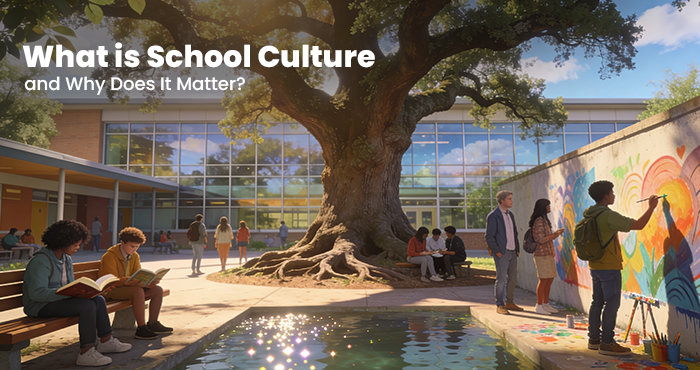
Have you ever entered a school and felt either warmth or discomfort within its premises? This is where understanding what is school culture becomes important. This sensation is neither a coincidence nor a result of some superficial elements. This feeling emerges because of some deeper aspect that is created by the inhabitants of this school. This phenomenon is called school culture.
The definition of the concept “what is school culture?” can be called the first step that everyone who works at a school should take. This serves as a practical school culture definition for educators. School culture defines students’ learning, teachers’ pedagogical activities, and the overall progress of this educational institution.
In this blog, we will discuss in depth what is meant by school culture, its importance, and what measures may help you develop your school culture.
What is School Culture? A Simple, Clear Definition
School culture refers to the common value system, beliefs, practices, and behavior that pervades the learning institution. School culture is the attitude that exists in the hallways at your school. School culture can be described by the mood teachers experience every Monday. School culture may be determined by whether students dare to raise their hands to ask questions in class.
This explanation works as a clear school culture definition for schools. Put another way, every school has its own distinct personality that reflects the learning environment within the institution. Every school is either energized, respectful, purposeful, or otherwise, and that defines the institution’s culture. School culture cannot be found in any code of conduct or policy manual.
School culture is also not formed after a single conversation. It takes thousands of interactions and behaviors, which occur on a daily basis, to create a school culture. In most cases, school administrators have the ability to control and influence the kind of school culture that prevails.
Why the Importance of School Culture Cannot Be Ignored
Many school administrators place emphasis on standardized test scores, enrollment figures, and academic programs. This highlights the real importance of school culture in daily school operations. These factors are important indeed; yet, none will function efficiently without a vibrant school culture providing support for all other operations from behind the scenes.
It makes sense that, when students are valued and considered an integral part of the educational institution, they attend class regularly, make greater efforts to learn, and develop an interest in the institution. At the same time, a supportive atmosphere for educators enables them to put more effort into teaching and stay at the same job longer.
Another indication of the importance of school culture is the ability of the institution to cope with difficult situations, such as conflicts between teachers and students or new policies generating stress among educators. This clearly shows the importance of school culture for both students and staff.
What a Positive School Culture Actually Looks Like
Every Voice Feels Heard
In a school where there is a good school culture, there is an environment where people can freely air their views. Teachers are free to offer suggestions without fear of being silenced. Learners can freely request assistance without embarrassment. Parents also feel welcome to take part in the discussion. This is one of the strongest indicators of good school culture. This is a sign of a positive school culture.
Respect Runs in Every Direction
In an effective school climate, respect is not merely student-to-teacher. Respect is teacher to student, leader to follower, and institution to community. The moment that people treat one another with the dignity that comes with being human, the entire atmosphere changes, becoming more secure, concentrated, and unified by a common cause.
Growth is Celebrated, Not Just Results
Schools with a good school culture don’t just focus on praising the students who scored the best. They praise those who made an effort this week compared to last week. They also praise teachers who taught in a different way. This change from “results are what matter” to “effort is important” has a profound impact on everyone’s attitude when they come to school. Such practices build a positive school culture over time.
How School Environment Impacts Student Outcomes
The influence of school environment on students’ performance is a phenomenon that has been proven countless times through scientific research. This clearly reflects the school environment’s impact on learning. In a nurturing, secure, and stimulating environment, students learn more effectively, and they have a positive motivation towards studying, which decreases misbehavior and lack of interest among learners.
For instance, imagine yourself being in an environment for six to eight hours daily. It would be very difficult for you to study and concentrate in a classroom that makes you feel hostile, uncomfortable, and insecure. On the other hand, being in a caring, just, and inspiring environment can turn your school experience into an enjoyable one.
It should be mentioned that the school environment is influential not only on students but also on educators working there. In a healthy educational environment, teachers are less susceptible to exhaustion, are more enthusiastic about their job, and tend to stick to it longer. This is another example of a strong school environment impact.
What Breaks School Culture and How to Fix It
Not every school has a positive culture, and this is fine to acknowledge. It might be facing challenges such as high teacher turnover, poor morale among teachers and staff, disengaged students, or a lack of trust between the administration and teaching staff. Such a situation calls for a change – not punishment, but efforts towards improvement.
Some common things that affect the culture of an institution and the best solutions include:
- Limited communication from administration – solve this by communicating openly and consistently with staff
- Mistreating staff members – solve this by making sure everyone feels appreciated
- Inability to connect with students – make sure to involve everyone in decision-making
- Developing a blaming culture after a mistake occurs – solve this by encouraging learning from mistakes
- Absence of vision – solve this by involving everyone in planning
As expected, none of the above solutions occur instantly; rather, they depend on the leadership taking action.
A Book That Tackles School Culture Head-On
For those who are already school leaders, this article presents an opportunity to learn about the book, The Ripple Effect of School Culture, which helps in comprehending one’s current state and offers solutions. About Dr. Eugene Wallace Dr. Eugene Wallace is a veteran educator and speaker who assists school leaders in creating positive school cultures for the better development of learners and educators.
This book explains what school culture means and the reasons for its importance. Dr. Wallace presents his understanding of school culture in simple and understandable language. He highlights how leaders’ daily activities, like the way they communicate and respond to conflict, influence school culture. The Ripple Effect of School Culture provides readers with insights into the elements that affect the educational process and contribute to its successful completion.
The book’s outstanding features include its practical approach and its ability to simplify complex concepts. This book is not theoretical; it is practical and straightforward, unlike other books written by theorists. Readers will learn about the impact of school culture from a practical point of view since Dr. Wallace himself has been involved in school leadership.
Conclusion
It is not something that simply evolves. Now that you understand what is school culture, it is something that is meticulously planned, intentionally developed, and systematically nurtured. The manner in which you greet your faculty members each morning, how you react to an emergency when your staff is watching, and how your students feel when they enter your institution all contribute to it.
Since you have now grasped what school culture is and its importance, it is your turn to act. Begin with little actions. Identify one thing you can change about yourself to foster a sense of trust, mutual respect, and a sense of purpose among your school community members. Continue doing so next week. That is how you can alter the culture of your institution one deliberate act at a time.
To explore more about building a school where everyone belongs and thrives, visit Dr. Eugene Wallace’s leadership insights for practical guidance rooted in real experience. And if you are ready to take a bigger step, feel free to connect with Dr. Eugene Wallace directly and start a conversation about what your school needs most.
FAQs
- What is school culture in simple words?
School culture refers to the collective ethos, behaviors, and values that characterize a particular school community. This explains in simple words what is school culture. School culture encompasses interpersonal relationships, how conflicts are addressed, and whether students and teachers feel safe and respected on a daily basis.
- Why is a positive school culture important for students?
A good learning environment enables the students to become part of the classroom and feel secure, thereby enhancing the way they study and behave. Students who have a sense of belonging in the environment where they are working will be much more productive.
- How does the school environment impact teacher performance?
Teachers’ perception of school atmosphere is highly significant. Teachers who are supported, respected, and feel like they belong in their professional learning community will be more effective as teachers and have longevity in their careers. Conversely, a negative school atmosphere will lead to exhaustion of these teachers and high turnover rates.
- How can a school principal improve school culture?
A way that a principal can influence the culture of his/her school would be by being a good listener, communicating well, recognizing achievements and hard work, dealing with conflicts fairly, and being an excellent example himself/herself. Minor actions from the administration will yield the largest cultural change.
- Where can I learn more about building a strong school culture?
A great place to start is The Ripple Effect of School Culture by Dr. Eugene Wallace. It offers honest, practical insights on what school culture is, why it matters, and how school leaders can take real steps to build an environment where both students and educators can grow together.